
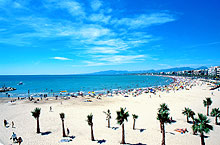
 The
"Costa Daurada" owes its name to the golden colour
of the sun reflected on the fine sand of its beaches. The
coastal area is sheltered by a very peculiar Mediterranean light
and covers a total of 202 kilometres of beaches, with clear, shallow
water. The
"Costa Daurada" owes its name to the golden colour
of the sun reflected on the fine sand of its beaches. The
coastal area is sheltered by a very peculiar Mediterranean light
and covers a total of 202 kilometres of beaches, with clear, shallow
water. From the little fisher villages to the big tourist centres, it offers the visitors everything they dream to find in their holidays: quality lodgings, family activities, night life, leisure, sports such as golf, navigation..., complemented by the big attraction of the Costa Daurada: Port Aventura. A special infrastructure thought out to enjoy the coast is the reservation centre for leisure, navigation and lodging of the Estación Náutica de Salou - Cambrils - Mont-roig - Miami Platja. 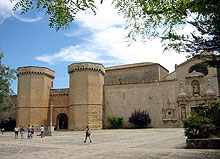 The
inland of the Costa Daurada is a synonym of contrasts, with bright
colours playing the leading role: the intense green of the hazel
nut trees and vines, the olive grey and the ochre and brown colours
of the stones of the Cistercian monasteries, all of it surrounded
by the blue colours of the sky. The
inland of the Costa Daurada is a synonym of contrasts, with bright
colours playing the leading role: the intense green of the hazel
nut trees and vines, the olive grey and the ochre and brown colours
of the stones of the Cistercian monasteries, all of it surrounded
by the blue colours of the sky.The inland villages are a true paradise for outdoor sports lovers: climbing, hang gliding, mountain bike riding, hill walking, horseback riding... and they offer the charm of those villages where the time seems to have stopped. The leisure offers in the Costa Daurada never end, there are countless options to spend time doing what you like most. One of the alternatives with a broad and high quality offer in the region is thermal tourism. The Costa Daurada keeps remains and monuments giving evidence of the pass of people along history. The oldest remains are prehistoric caves and simple Iberian villages. The Roman monumental complex of Tarraco, former capital of the Roman Empire on the Iberian Peninsula, was declared World Heritage by the UNESCO in 2000, turning Tarragona into the second city in the world as regards the significance of its Roman remains. 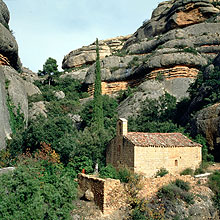 There
is also a significant medieval legacy with the monasteries of
the Ruta del Cister de Santes Creus and Poblet, also declared
World Heritage by the UNESCO in 1992, and villages that where highly
important during this historical period. There
is also a significant medieval legacy with the monasteries of
the Ruta del Cister de Santes Creus and Poblet, also declared
World Heritage by the UNESCO in 1992, and villages that where highly
important during this historical period. In Tortosa we find samples of the renaissance culture, a time in which it was an important port, the link to the inland of the Peninsula. The latest monumental wealth of the Costa Daurada is Modernism, with the city of Reus playing the main role, integrated in the European Art Nouveau Network. Another important sample of this artistic movement can be found in the wine cellar cooperatives of the most rural regions in the inland. The gastronomy in the Costa Daurada is a quality art that knows perfectly well how to combine the diversity of the Mediterranean cuisine. The region does also have a large wine tradition and has six areas with "Denominación de Origen" (designation of origin), endorsing the quality of the wines produced here. The Costa Daurada is filled with vitality and "fiesta", and this is the real living heritage it has. There are traditions that have gone beyond the passing of time, reaching us with a large cultural wealth, becoming largely attended and open events, allowing us to build our identity. |